By RFID MFG Editorial Team · Updated August 12, 2026
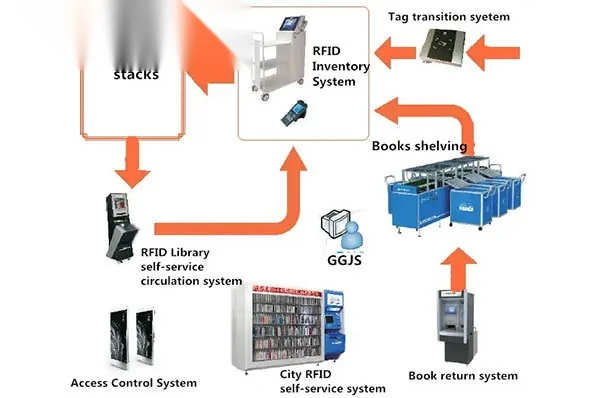
Libraries were early adopters of RFID because it solves two problems at once: slow circulation desks and time-consuming shelf management. An HF RFID label inside each book lets several items be checked out or returned in a single stack, without scanning each barcode.
The same tags drive security gates at the exit, self-return chutes that pre-sort returns, and handheld readers that let staff inventory or find mis-shelved items in a fraction of the usual time.
Libraries standardise on HF 13.56 MHz labels to ISO 15693 / ISO 18000-3 because that band reads a stack of books reliably at close range with strong anti-collision — where UHF would over-read neighbouring shelves. Tags are thin, paper-thin adhesive labels applied inside the cover, optionally with a printed barcode and the library’s branding so they work alongside legacy systems during migration. We supply the labels pre-encoded to the catalogue scheme, plus matching security-gate and desk hardware, so a branch can convert without re-labelling later.
Manual/barcode vs RFID libraries
| Task | Barcode | RFID |
|---|---|---|
| Checkout | One book at a time | A stack at once |
| Shelf inventory | Hours of scanning | Minutes with a wand |
| Self-service | Limited | Full self-checkout |
| Anti-theft | Separate system | Same tag does both |
Key takeaways
- Self-service checkout and return cut queues
- Whole-shelf inventory in minutes, not hours
- One tag handles circulation and security
- Better experience for patrons and staff alike
Related products & guides
Frequently asked questions
Which RFID frequency do libraries use?
HF 13.56 MHz (ISO 15693 / ISO 18000-3) is the library standard, balancing read reliability at close range with anti-collision for reading stacks of books.
Can RFID tags also work as anti-theft?
Yes. The same HF tag drives security gates at the exit, so a single tag handles both circulation and loss prevention.