By RFID MFG Editorial Team · Updated August 12, 2026
The challenges
- Manual, error-prone animal records
- Regulatory traceability and movement reporting
- Tracking disease, treatment and vaccination history
- Capturing individual weight, breeding and yield data
- Harsh outdoor and on-animal conditions
How RFID helps
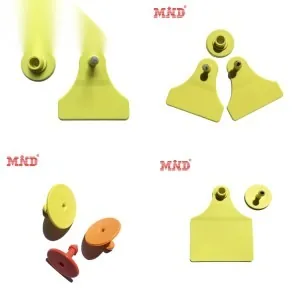
Each animal wears a rugged LF ear tag to ISO 11784/85 (FDX-B). A handheld or race-side panel reader captures the ID and links it to herd-management software, so treatments, weights and movements are recorded against the right animal in seconds.
The unique ID underpins traceability all the way from farm to processor.
Because tags live outdoors on the animal for years, material and standard matter most. Ear tags are moulded in UV- and water-resistant TPU/PP, sealed to IP68, and encoded to ISO 11784/85 (FDX-B) at 134.2 kHz so they read on any compliant panel or handheld reader worldwide. We can pre-print visual ID numbers to match the electronic ID and supply the LF readers alongside, so a farm or co-op gets a matched, standards-compliant system from one source.
Benefits
- A unique, standards-based identity per animal
- Accurate, fast record-keeping in the field
- Supports traceability and movement compliance
- Better disease, breeding and yield management
- Durable tags for harsh outdoor use
Typical impact
| Task | Manual | With RFID |
|---|---|---|
| Animal identification | Visual / paper | Unique electronic ID |
| Record accuracy | Error-prone | Linked to the animal |
| Traceability | Difficult | Farm-to-fork |
| Field data capture | Slow | One quick scan |
Figures are typical ranges commonly reported across industry deployments; actual results vary by environment, process and integration.
Recommended products
RFID Animal Tag
ISO 11784/85 ear tags for livestock identification.
RFID Readers / Writers
Handheld and panel LF readers for animal ID.
Specialty RFID Tags
Custom durable tags for niche agricultural needs.