By RFID MFG Editorial Team · Updated August 12, 2026 · 2 min read
The core difference
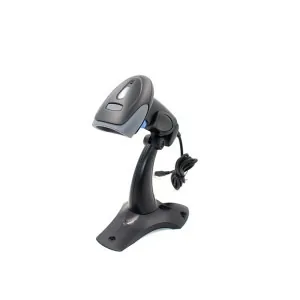
Barcodes are printed patterns read optically, one at a time, in direct line of sight. RFID tags are read by radio, in bulk, through packaging and without aiming. For many operations RFID turns a multi-hour stock count into minutes — but barcodes remain unbeatable on raw cost for simple, low-volume needs.
RFID vs barcode
| Factor | Barcode | RFID |
|---|---|---|
| Line of sight | Required | Not required |
| Items per scan | One | Hundreds at once |
| Range | A few cm | Up to ~10 m (UHF) |
| Re-writable data | No | Yes |
| Durability | Low (print wears) | High (sealed tag) |
| Unit cost | Near zero | Cents and up |
| Reads through packaging | No | Yes |
When RFID is worth it
RFID pays off when labour, speed or accuracy matter: warehouse and retail inventory, asset tracking, returnable assets, work-in-progress, and anywhere manual scanning is a bottleneck. The tag cost is offset by faster counts, fewer errors and less shrinkage.
When barcodes still win
For low-volume, single-item checkout, disposable packaging or tight per-unit budgets, barcodes are still the rational choice. Many operations run both — barcodes at the consumer level, RFID for cases and pallets.
The ROI math
The business case for RFID is rarely the tag price — it is labour and accuracy. A cycle count that takes hours by barcode scanning can drop to minutes with a UHF handheld reading hundreds of tags per second. In retail, Auburn University RFID Lab research cited by GS1 US puts the shift at an average of 63% inventory accuracy before RFID to 95% after, alongside a 96% reduction in cycle-count time and out-of-stock reductions of up to 50%. Those recurring savings usually pay back the one-time tag and reader investment within the first year for medium-to-high volume operations.
A hybrid approach is common
Most operations do not switch overnight. A practical path is to keep barcodes at the item and consumer level, add RFID at the case, pallet or asset level where bulk reading pays off, and use dual RFID-plus-barcode labels during the transition so both systems keep working.
Related reading
Frequently asked questions
Is RFID replacing barcodes?
Not entirely. RFID is replacing barcodes where bulk, no-line-of-sight reading adds value (inventory, logistics), but barcodes remain common for low-cost, single-item use.
How much more does an RFID tag cost than a barcode?
A printed barcode is essentially free; a UHF RFID inlay costs from a few cents upward depending on volume and type, which is justified by labour and accuracy savings.
How accurate is RFID inventory versus barcode?
Auburn University RFID Lab research, cited by GS1 US, puts average retail inventory accuracy at 63% without RFID and 95% with item-level RFID, with cycle-count time down 96%. Actual results depend on tag choice, read infrastructure, product material and process discipline.
Can RFID and barcodes be combined?
Yes. Many RFID labels are also printed with a barcode and human-readable text so they work with both systems.