By RFID MFG Editorial Team · Updated August 12, 2026
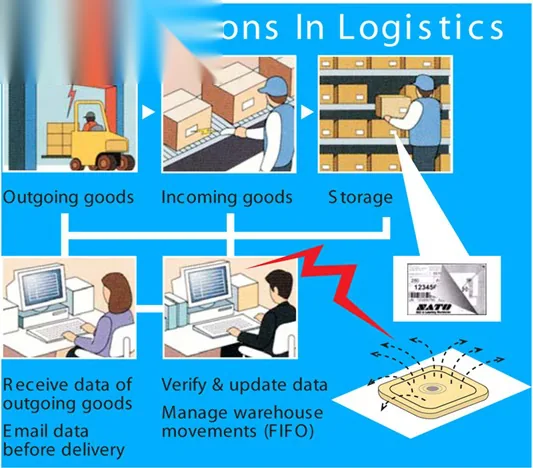
Logistics is a chain of hand-offs, and every manual scan is a chance for error or delay. RFID lets pallets and parcels be read in bulk as they move — at the dock, on the conveyor and onto the truck — so the system always knows what is where.
The result is fewer lost shipments, faster loading and unloading, and accurate, real-time visibility that both operators and their customers can rely on.
The tag has to survive the journey. Cartons and parcels use economical UHF paper labels; returnable assets such as roll cages, totes and containers use rugged hard tags or on-metal tags that read reliably on steel and last for years of reuse. Pre-encoding to an SSCC or your own numbering scheme means tags work the moment they arrive, and pairing fixed dock-door readers with handheld units gives both automatic gate reads and spot checks. Because we manufacture the inlays, labels and hard tags together, the whole chain is sourced and tuned consistently.
Key takeaways
- Bulk reads at every hand-off remove manual bottlenecks
- End-to-end visibility reduces losses and mis-ships
- Long-range UHF suits pallet and parcel tracking
- Real-time data improves customer transparency
How RFID MFG helps
RFID MFG’s UHF labels, inlays and hard tags are built for the knocks of logistics, and can be pre-encoded to your SSCC or internal numbering for plug-in deployment.
Related products & guides
Frequently asked questions
How does RFID reduce shipment losses?
Because items are read automatically in bulk at each hand-off, discrepancies are caught immediately rather than discovered later, reducing lost and mis-routed goods.
Do tags survive the logistics environment?
Yes. We offer rugged labels and hard tags rated for moisture, abrasion and temperature swings common in transport and storage.