By RFID MFG Editorial Team · Updated September 1, 2026 · 2 min read
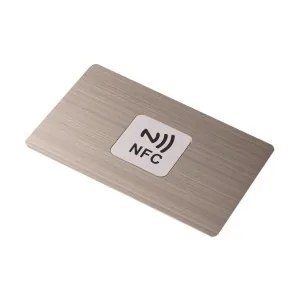
How NFC works
NFC (Near Field Communication) is a subset of HF RFID standardised for two-way phone interaction at a few centimetres. The phone powers the passive NFC tag and reads its stored data (NDEF), typically a URL or contact — opening it directly in the browser with no app or pairing.
NTAG chips
Most NFC products use NTAG213/215/216, differing mainly in memory (144–888 bytes). NTAG215 (504 bytes) is popular for vCards and richer data. Chips can be locked so the content cannot be overwritten — important for authentication.
Cards vs tags vs labels
NFC comes in many forms: printed cards (membership, business cards), durable tags and keyfobs (access, asset), and thin printed labels/stickers (packaging, posters). The form factor changes; the NFC principle stays the same.
Encoding and security
Tags are encoded with your URL, vCard or command and can be password-protected or permanently locked. For anti-counterfeiting, tamper-evident materials and unique, locked IDs make copying impractical.
Applications
Tap-to-share business cards, smart packaging and product authentication, tap-to-reorder, smart posters and menus, access control, and interactive marketing. NFC bridges a physical product and a digital experience in one tap.
How to encode an NFC card or tag
Encoding writes an NDEF record — usually a URL, vCard or app command — onto the chip. For small batches you can use a free phone app (e.g. NXP TagWriter) to write and then lock a tag; for production volumes an NFC encoder writes and verifies thousands per hour. We supply tags blank, pre-encoded to your data, or encoded with a redirect URL so you can change the destination later without re-issuing the tag. Locking prevents anyone from overwriting the content — essential for authentication.
NFC vs QR code
NFC and QR both link a physical item to digital content, but they behave differently. QR is free to print and works on any camera, yet it is visible, easy to copy and can be swapped by a sticker. NFC is invisible inside the product, feels premium (a tap, no aiming), and — with a locked, unique chip — is far harder to clone, which is why brands use NFC for authentication and premium experiences while QR stays the low-cost option. Many products carry both.
NFC form factors
| Form | Best for |
|---|---|
| NFC card | Membership, digital business cards |
| NFC label / sticker | Packaging, posters, authentication |
| NFC tag / keyfob | Access, asset tracking |
| NFC wristband | Events, cashless, access |
Related reading
Frequently asked questions
Do NFC tags need an app?
No. NTAG tags store an NDEF record (e.g. a URL), so a tap opens it directly in the phone’s browser without any app.
Can NFC be used for anti-counterfeiting?
Yes. A locked, unique NFC chip plus tamper-evident material lets customers verify authenticity with a tap and makes cloning impractical.
Which NFC chip should I choose?
NTAG213 for short URLs, NTAG215 for vCards/richer data, NTAG216 for the most memory. We can advise based on your content.
Does NFC work on iPhone and Android?
Yes. Modern Android phones read NFC natively, and iPhones have read NFC tags in the background since the iPhone XS/XR — users simply tap the tag, no app required.